
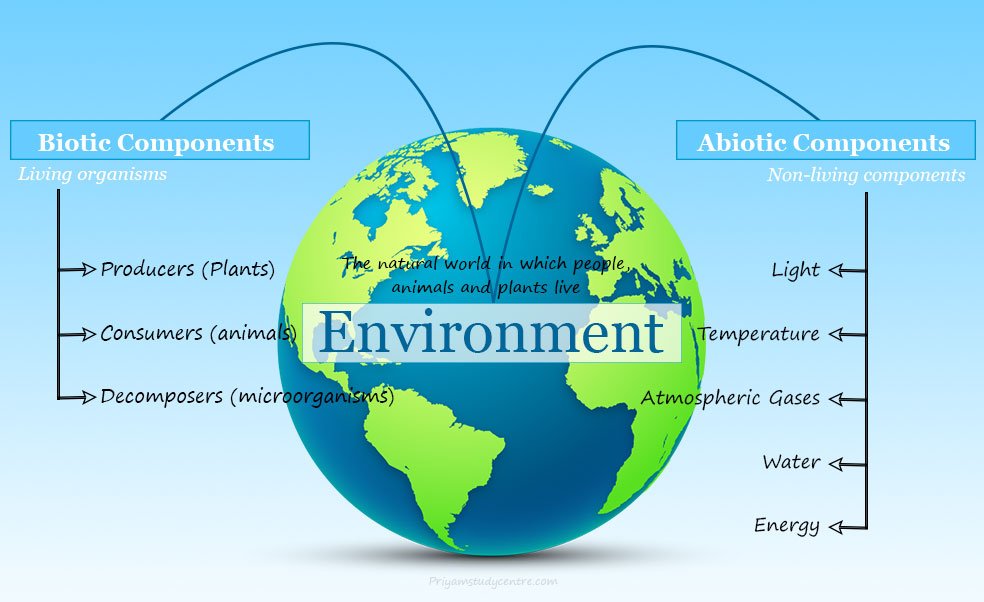
Have you ever paused for a moment and looked around you? The air you breathe, the water you drink, the streets you walk on, the trees lining the road, even the noise from passing cars — all of it forms your environment. Yet, when someone asks you to define environment, the answer often feels more complicated than it should be.
Is it just nature? Is it society? Or is it something bigger?
In this detailed guide, we’ll define environment in simple words, explore its meaning, break down its types, and look at real-life examples. Whether you’re a student, a teacher, or simply curious about environmental science, this article will help you understand the concept clearly and practically.
Let’s begin with the basics.
What Does It Mean to Define Environment?
To define environment, we can say it is everything that surrounds us and affects our life. It includes both living and non-living things. In simple terms, environment is the combination of natural, physical, biological, social, and cultural elements that influence an organism or human life.
The word “environment” comes from a French word meaning “to surround.” And that’s exactly what it does — it surrounds us.
When experts define environment in environmental studies, they usually describe it as the total surroundings in which living organisms exist, interact, and survive. This includes:
-
Air (atmosphere)
-
Water (hydrosphere)
-
Land (lithosphere)
-
Living organisms (biosphere)
-
Human-made structures
In other words, the environment is not limited to forests and oceans. It also includes cities, buildings, roads, institutions, and even cultural traditions.
Meaning of Environment in Simple Words
If we try to define environment in everyday language, it simply means our surroundings — everything that influences how we live, grow, and survive.
For example:
-
A child growing up in a peaceful neighborhood has a different environment than a child in a busy urban city.
-
A fish lives in an aquatic environment.
-
A camel survives in a desert environment.
Each living organism depends on its surroundings. Therefore, the meaning of environment goes beyond scenery — it directly impacts survival, health, behavior, and development.
Key Elements of Environment
To better define environment, let’s break it down into core elements:
-
Physical Factors – temperature, sunlight, soil, climate, and geography
-
Biological Factors – plants, animals, microorganisms, biodiversity
-
Social Factors – culture, education, politics, economy
-
Chemical Factors – oxygen levels, pollution, nutrients
Together, these elements form ecosystems and shape life on Earth.
Types of Environment
When experts define environment in detail, they usually divide it into different categories. Understanding the types helps us see how broad the concept really is.
1. Natural Environment
The natural environment includes all naturally occurring things. It exists without human intervention.
Components of Natural Environment:
-
Mountains and valleys
-
Rivers, lakes, and oceans
-
Forests and wildlife
-
Climate and weather
-
Soil and minerals
The natural environment forms the foundation of life. It provides natural resources like water, oxygen, food, and energy.
For example:
-
Rainforests support rich biodiversity.
-
Oceans regulate global climate.
-
Soil enables agriculture.
Without the natural environment, life would not exist.
2. Human-Made Environment
When we define environment, we must include things created by humans. This is known as the human-made or artificial environment.
Examples:
-
Buildings and houses
-
Roads and highways
-
Factories and industries
-
Dams and bridges
-
Cities and towns
While the natural environment provides raw materials, humans modify it to create infrastructure and technology. However, excessive modification often leads to environmental degradation, pollution, and climate change.
3. Social Environment
The social environment refers to the cultural, economic, and political surroundings that influence people’s lives.
It includes:
-
Family structure
-
Educational systems
-
Government policies
-
Community values
-
Social relationships
For instance, a supportive social environment can positively affect mental health, while a stressful one can lead to anxiety and conflict.
So when we define environment, we must consider social interaction as well.
4. Biological Environment
The biological environment consists of all living organisms in a specific area.
This includes:
-
Plants
-
Animals
-
Microorganisms
-
Humans
These organisms interact in food chains and food webs, forming ecosystems. For example, a forest ecosystem includes trees, birds, insects, fungi, and mammals living in balance.
Components of Environment Explained
To fully define environment, we should understand its four major spheres:
Atmosphere
The layer of gases surrounding Earth. It provides oxygen and protects us from harmful radiation.
Hydrosphere
All water bodies, including oceans, rivers, groundwater, and glaciers.
Lithosphere
The Earth’s outer crust. It contains soil, rocks, and minerals.
Biosphere
The zone where life exists, combining land, air, and water.
Together, these spheres maintain ecological balance.
Why Is It Important to Define Environment?
Understanding how to define environment is not just an academic exercise. It has real-world significance.
Here’s why it matters:
-
Helps in environmental protection
-
Supports sustainable development
-
Promotes conservation of natural resources
-
Encourages awareness of pollution and climate change
-
Improves public health
When we clearly define environment, we understand how our actions impact ecosystems and biodiversity.
Real-Life Examples of Environment
Let’s make this more practical.
Example 1: Desert Environment
-
Low rainfall
-
High temperature
-
Sandy soil
-
Specially adapted plants like cacti
-
Animals like camels and reptiles
Example 2: Urban Environment
-
High population density
-
Skyscrapers and infrastructure
-
Traffic and noise pollution
-
Limited green spaces
Example 3: Marine Environment
-
Saltwater oceans
-
Coral reefs
-
Marine biodiversity
-
Ocean currents
Each example shows how different environmental factors shape living conditions.
Environmental Issues in Today’s World
When we define environment today, we cannot ignore environmental problems.
Some major environmental issues include:
-
Climate change
-
Global warming
-
Air pollution
-
Water contamination
-
Deforestation
-
Loss of biodiversity
-
Soil erosion
-
Plastic waste
-
Industrial emissions
-
Habitat destruction
These challenges threaten ecological balance and sustainable living.
Moreover, rapid urbanization and industrialization have increased carbon footprint and greenhouse gas emissions.
The Relationship Between Humans and Environment
Humans are part of the environment, not separate from it. However, our activities significantly impact it.
Positive Impacts:
-
Renewable energy use
-
Afforestation programs
-
Wildlife conservation
-
Sustainable agriculture
Negative Impacts:
-
Overpopulation
-
Resource depletion
-
Environmental degradation
-
Toxic waste dumping
Therefore, when we define environment, we must recognize the role of human responsibility.
Environment and Sustainable Development
Sustainable development means meeting present needs without compromising future generations.
Key principles include:
-
Conservation of natural resources
-
Renewable energy adoption
-
Waste management
-
Pollution control
-
Environmental awareness
The idea is to maintain ecological balance while supporting economic growth.
Difference Between Environment and Ecosystem
People often confuse these two terms.
Here’s a simple comparison:
| Environment | Ecosystem |
|---|---|
| Everything that surrounds us | Interaction between living and non-living things |
| Broad concept | Specific system |
| Includes natural and human-made elements | Focuses mainly on biological interaction |
So, while every ecosystem is part of the environment, not all parts of the environment are ecosystems.
Key Characteristics of Environment
To summarize, when we define environment, we notice these characteristics:
-
Dynamic and constantly changing
-
Interconnected components
-
Influences living organisms
-
Affected by human activities
-
Supports biodiversity
Everything in nature is interconnected. A small disturbance in one area can affect the entire system.
Importance of Environmental Awareness
Environmental education plays a major role in protecting our planet.
Why awareness matters:
-
Reduces pollution
-
Promotes recycling
-
Encourages green living
-
Supports climate action
-
Protects wildlife
Small actions — like planting trees, saving water, reducing plastic use — create a positive impact.
Frequently Asked Questions About Environment
What is the simplest way to define environment?
The simplest way to define environment is to say it is everything around us that affects life.
Is environment only about nature?
No. It includes natural, social, and human-made surroundings.
Why is the environment important?
It provides air, water, food, shelter, and supports life on Earth.
Final Thoughts: Why Understanding the Environment Matters
To define environment is to understand life itself.
The environment is not just a background to our existence. It is the foundation of survival, growth, and development. It shapes our health, influences our lifestyle, and determines the future of our planet.
Today, more than ever, understanding environmental science, ecological systems, climate patterns, biodiversity conservation, and sustainable practices is crucial. Environmental protection is not someone else’s responsibility — it belongs to each of us.
Now that you can clearly define environment, take a moment to reflect on your own surroundings. Are you contributing positively? Are you supporting conservation and sustainability?
If this guide helped you understand the meaning, types, and examples of environment, share it with others and spread awareness. The more we learn, the better choices we make.