
Have you ever stared at a math problem and thought, “I understand the shape… but how do I actually calculate the space inside it?” You’re not alone. Volume can feel intimidating at first. Cubes are easy. Cylinders? Manageable. But when cones, spheres, and pyramids enter the picture, things get tricky.
That’s exactly why this ultimate volume formula guide exists.
Whether you’re a middle school student, a high school learner tackling geometry, preparing for competitive exams, or just brushing up on your math skills, understanding the volume formula doesn’t have to be complicated. In fact, once you grasp the patterns behind each volume formula, everything starts to click.
In this guide, we’ll break down every major volume formula, explain when and why to use it, provide step-by-step examples, and connect each concept to real-world applications. By the end, you won’t just memorize formulas — you’ll truly understand them.
Let’s dive in.
What Is Volume?
Before we explore each volume formula, let’s clarify the basics.
Volume measures the amount of three-dimensional space an object occupies. In simple terms, it tells you how much “stuff” fits inside a shape.
Common units of volume include:
-
Cubic meters (m³)
-
Cubic centimeters (cm³)
-
Cubic inches (in³)
-
Liters
-
Milliliters
Unlike area, which measures two-dimensional space, volume applies to 3D shapes. That means we need three dimensions: length, width, and height.
Understanding the volume formula for each shape helps in geometry, engineering, architecture, physics, and even daily tasks like cooking or packaging.
Volume Formula for a Cube
Formula:
V = a³
Where:
-
a = side length
A cube is one of the simplest 3D shapes. All sides are equal, which makes its volume formula incredibly straightforward.
Example:
If a cube has a side length of 5 cm:
V = 5³
V = 125 cm³
That’s it. Clean and simple.
Real-Life Application
Cubes appear in:
-
Storage boxes
-
Dice
-
Shipping containers
-
Ice cubes
Understanding this volume formula helps calculate storage capacity and material usage.
Volume Formula for a Rectangular Prism
Formula:
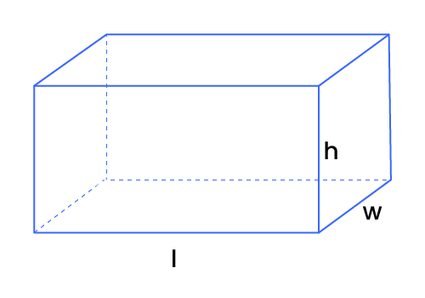
V = l × w × h
Where:
-
l = length
-
w = width
-
h = height
A rectangular prism (also called a cuboid) extends the cube concept. The sides are not necessarily equal.
Example:
Length = 8 m
Width = 3 m
Height = 2 m
V = 8 × 3 × 2
V = 48 m³
This volume formula is commonly used in construction and interior design.
Where It’s Used
-
Rooms
-
Water tanks
-
Shipping boxes
-
Aquariums
Moreover, calculating room volume helps with ventilation, heating, and air conditioning systems.
Volume Formula for a Cylinder
Formula:
V = πr²h
Where:
-
r = radius of the base
-
h = height
-
π ≈ 3.1416
A cylinder has two circular bases and straight sides.
Example:
Radius = 4 cm
Height = 10 cm
V = π × 4² × 10
V = π × 16 × 10
V = 160π
V ≈ 502.65 cm³
The volume formula for cylinders is widely used in real-world measurements.
Applications
-
Water pipes
-
Gas tanks
-
Soda cans
-
Industrial rollers
Understanding circular cross-sections is essential in engineering and physics.
Volume Formula for a Sphere
Formula:
V = (4/3)πr³
A sphere is perfectly symmetrical — think of a basketball or planet.
Example:
Radius = 6 cm
V = (4/3) × π × 6³
V = (4/3) × π × 216
V = 288π
V ≈ 904.78 cm³
This volume formula appears often in physics and astronomy.
Real-World Uses
-
Ball bearings
-
Planets
-
Bubbles
-
Water droplets
Because spheres maximize volume for a given surface area, nature loves them.
Volume Formula for a Cone
Formula:
V = (1/3)πr²h
Notice something interesting? It’s one-third of the cylinder volume formula.
That’s not a coincidence. In fact, three identical cones can fill one cylinder with the same base and height.
Example:
Radius = 3 cm
Height = 12 cm
V = (1/3) × π × 3² × 12
V = (1/3) × π × 9 × 12
V = 36π
V ≈ 113.10 cm³
Applications
-
Ice cream cones
-
Traffic cones
-
Funnels
The volume formula for cones is essential in manufacturing and design.
Volume Formula for a Pyramid
Formula:
V = (1/3)Bh
Where:
-
B = base area
-
h = height
Just like cones, pyramids use the one-third rule.
Example (Square Pyramid):
Base side = 4 m
Height = 9 m
Base area = 4 × 4 = 16 m²
V = (1/3) × 16 × 9
V = 48 m³
This volume formula applies to architectural structures and historical monuments.
Quick Comparison Table of Common Volume Formulas
| Shape | Volume Formula |
|---|---|
| Cube | a³ |
| Rectangular Prism | l × w × h |
| Cylinder | πr²h |
| Sphere | (4/3)πr³ |
| Cone | (1/3)πr²h |
| Pyramid | (1/3)Bh |
Keeping this reference handy makes solving geometry problems much faster.
Why Understanding Volume Formula Matters
You might wonder — beyond exams, why should I care?
Here’s why:
-
It helps calculate capacity and storage
-
Essential in construction and architecture
-
Used in physics and fluid mechanics
-
Important in chemistry for measuring liquids
-
Crucial in manufacturing and packaging
-
Needed in 3D modeling and CAD design
Moreover, standardized tests frequently include volume formula questions, especially in algebra and geometry sections.
Step-by-Step Strategy to Solve Volume Problems
When using any volume formula, follow this structured approach:
-
Identify the shape correctly.
-
Write the correct formula.
-
Plug in known values.
-
Use proper units.
-
Simplify carefully.
-
Double-check calculations.
Many mistakes happen simply because students confuse radius with diameter or forget to cube values.
Common Mistakes to Avoid
Even when you know the volume formula, small errors can cost marks.
Here are typical pitfalls:
-
Forgetting to cube the radius in sphere problems
-
Using diameter instead of radius
-
Mixing units (cm and m)
-
Ignoring the one-third factor in cones and pyramids
-
Rounding π too early
Precision matters in mathematics.
Advanced Concepts Related to Volume
Once you understand the basic volume formula for common shapes, you can explore advanced topics such as:
Composite Solids
These combine multiple shapes. For example:
-
A cylinder with a hemisphere on top
-
A rectangular prism with a pyramid roof
To solve:
-
Break into simpler shapes.
-
Calculate each volume separately.
-
Add or subtract accordingly.
Volume by Integration
In calculus, we calculate volume using definite integrals. Methods include:
-
Disk method
-
Washer method
-
Shell method
These techniques allow precise volume calculation for irregular shapes.
Density and Volume
Density formula:
Density = Mass ÷ Volume
Understanding volume formula directly affects physics calculations involving buoyancy, pressure, and material properties.
Real-World Examples That Make Volume Click
Let’s make this practical.
Example 1: Filling a Swimming Pool
A rectangular pool:
Length = 10 m
Width = 5 m
Depth = 2 m
Volume = 10 × 5 × 2
Volume = 100 m³
Since 1 m³ = 1000 liters,
Pool holds 100,000 liters of water.
Example 2: Fuel Tank Capacity
Cylinder tank:
Radius = 1.5 m
Height = 4 m
V = π × 1.5² × 4
V ≈ 28.27 m³
That’s significant storage capacity.
These practical calculations show why mastering volume formula skills is incredibly useful.
Volume Formula in Competitive Exams
Standardized exams often test:
-
Word problems
-
Multi-step geometry questions
-
Conversion between units
-
Comparison of volumes
-
Ratio problems
Therefore, strong conceptual understanding helps solve problems faster and more accurately.
Units and Conversions
Always pay attention to units.
Common conversions:
-
1 m³ = 1000 liters
-
1 cm³ = 1 milliliter
-
1000 cm³ = 1 liter
Unit conversion errors are among the most common mistakes in geometry problems.
Practice Problems
Try solving these:
-
Find the volume of a sphere with diameter 10 cm.
-
Calculate the volume of a cone with radius 7 cm and height 14 cm.
-
A box measures 6 m × 4 m × 3 m. What is its volume?
-
A cylinder and cone have same base and height. Compare their volumes.
Working through practice questions strengthens memory and improves mathematical reasoning.
Tips to Remember Volume Formulas Easily
If memorization feels overwhelming, try these techniques:
-
Understand the pattern instead of memorizing blindly.
-
Notice that cones and pyramids share the one-third rule.
-
Associate shapes with real-life objects.
-
Write formulas repeatedly.
-
Solve at least five problems daily.
Repetition builds confidence.
Frequently Asked Questions
Is volume the same as capacity?
Not exactly. Volume measures space occupied, while capacity refers to how much a container can hold. However, they often use similar units.
Why is sphere volume multiplied by 4/3?
The factor comes from calculus derivation. It ensures accurate measurement of three-dimensional curvature.
Which volume formula is most commonly used?
The rectangular prism volume formula appears most often in real-world problems.
Final Thoughts: Master the Volume Formula Once and For All
The truth is, volume isn’t complicated — it’s consistent.
Once you understand the logic behind each volume formula, you stop memorizing and start thinking. Cubes, cylinders, spheres, cones, pyramids — they all follow patterns. Recognize those patterns, and geometry becomes manageable.
Moreover, these formulas are not just academic tools. They shape buildings, measure liquids, calculate storage, design machinery, and even help scientists understand planets.
So here’s my advice: don’t just read this guide. Grab a notebook. Solve examples. Rework the formulas. Challenge yourself with practice problems.
If this ultimate volume formula guide helped you understand the concept better, share it with classmates, bookmark it for revision, and keep practicing. Mastery comes from repetition — and now you have everything you need to get started.