
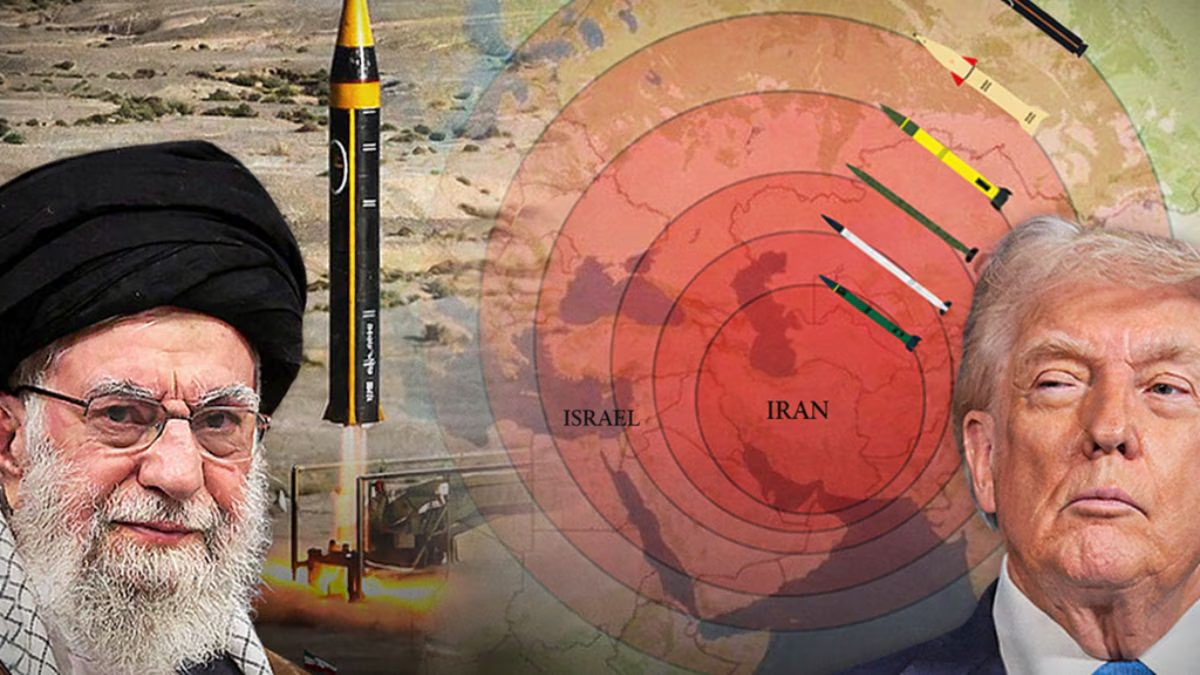
The Middle East rarely sleeps. Just when the world thinks tensions have cooled, headlines flare up again. If you’ve been following Breaking Iran Israel News, you already know that the situation feels different this time—more direct, more dangerous, and far less predictable.
For decades, the shadow war between Iran and Israel played out quietly—cyberattacks, proxy militias, covert operations, and diplomatic warnings. However, recent developments have pushed that rivalry into the open. Missile exchanges, regional alliances shifting, and global powers watching closely—it’s no longer just background noise. It’s front-page material.
In this in-depth look at Breaking Iran Israel News, we’ll unpack what’s really happening, why it matters, and what could come next. Whether you’re tracking geopolitics, global security, oil markets, or simply trying to make sense of the headlines, this guide breaks it down in clear, human terms.
Why Breaking Iran Israel News Is Dominating Global Headlines
The phrase Breaking Iran Israel News isn’t trending by accident. The tension between these two nations is rooted in ideology, military strategy, and regional dominance. But the current spike in hostilities feels sharper—and more direct—than previous flare-ups.
So what changed?
-
Direct military engagement instead of proxy-only conflict
-
Escalating rhetoric from leadership in both countries
-
Involvement of regional actors and global superpowers
-
Increased missile defense activity
-
Rising fears of a wider Middle East war
In short, this isn’t business as usual.
A Brief History of Iran–Israel Tensions
To understand today’s Breaking Iran Israel News, you need context.
Before 1979, Iran and Israel maintained relatively normal relations. That shifted dramatically after the Iranian Revolution. Since then, Iran’s leadership has positioned Israel as a key adversary in its foreign policy doctrine.
Meanwhile, Israel views Iran’s nuclear ambitions and military expansion as existential threats.
Key Flashpoints Over the Years
-
Israeli strikes targeting Iranian positions in Syria
-
Alleged sabotage of nuclear facilities
-
Cyber warfare operations
-
Support for rival armed groups in Lebanon and Gaza
-
Assassinations of military and scientific figures
Although tensions simmered for decades, both sides largely avoided full-scale war. That balance now feels fragile.
The Role of Regional Proxies
One cannot analyze Breaking Iran Israel News without discussing proxy groups.
Iran has long supported regional militias to extend its influence without direct confrontation. Among the most prominent is Hezbollah in Lebanon and Hamas in Gaza. These alliances complicate the conflict dramatically.
Israel, on the other hand, conducts precision strikes to prevent advanced weapons transfers and to disrupt hostile military infrastructure.
This web of alliances means that even a small incident can spiral quickly.
Nuclear Concerns: The Elephant in the Room
Every wave of Breaking Iran Israel News brings the nuclear question back into focus.
Israel has repeatedly stated it will not allow Iran to develop nuclear weapons capability. Iran insists its nuclear program is for peaceful energy purposes. However, uranium enrichment levels, international inspections, and sanctions continue to raise red flags.
The collapse of nuclear agreements in recent years added fuel to the fire. Without a strong diplomatic framework, mistrust deepens.
Why the Nuclear Issue Matters
-
Potential regional arms race
-
Heightened risk of preemptive strikes
-
Increased sanctions and economic pressure
-
Greater involvement of global powers
Simply put, nuclear tension transforms a regional rivalry into a global security concern.
Recent Escalations Explained
The latest Breaking Iran Israel News cycle began with direct exchanges rather than proxy skirmishes. Military analysts describe this phase as a shift from shadow conflict to overt confrontation.
Key developments include:
-
Drone and missile launches
-
Air defense interceptions
-
Heightened military readiness
-
Emergency security cabinet meetings
-
Diplomatic warnings at the United Nations
The world watched closely as air defense systems activated across the region. Markets reacted immediately, especially oil prices.
How Global Powers Are Responding
No conflict between Iran and Israel happens in isolation. The United States has historically supported Israel’s security, while also trying to prevent broader regional war. Meanwhile, Russia and China monitor developments carefully, weighing their strategic interests.
At the United Nations, emergency meetings and ceasefire calls are frequent whenever Breaking Iran Israel News escalates.
Why Superpower Involvement Matters
-
Military aid commitments
-
Sanctions enforcement
-
Diplomatic negotiations
-
Intelligence sharing
-
Naval deployments in strategic waterways
The Strait of Hormuz, for example, becomes a focal point during every spike in tensions, as global oil supply routes run through it.
Economic Impact: Oil, Markets, and Sanctions
Breaking Iran Israel News doesn’t just stay in the Middle East. It shakes financial markets worldwide.
Whenever missile strikes or threats make headlines:
-
Oil prices spike
-
Stock markets dip
-
Investors move toward safe-haven assets
-
Shipping insurance costs rise
-
Currency markets fluctuate
Energy security is central here. The Middle East produces a large share of global oil. Even rumors of disruption affect supply chains.
Sanctions against Iran also play a significant role. These measures impact trade, currency value, inflation rates, and domestic economic stability.
The Human Cost of Escalation
Behind every headline are real people.
Cities like Tehran and Jerusalem often brace for retaliation whenever Breaking Iran Israel News intensifies. Meanwhile, civilians in the Gaza Strip and border regions face heightened insecurity.
Air raid sirens, emergency shelters, disrupted schools, and economic uncertainty become daily realities.
It’s easy to focus on geopolitics. However, the humanitarian implications—displacement, trauma, infrastructure damage—are equally critical.
Military Capabilities: A Quick Comparison
While exact numbers are often classified, here’s a simplified overview:
| Factor | Iran | Israel |
|---|---|---|
| Missile Arsenal | Extensive ballistic missile program | Advanced missile defense systems |
| Air Power | Growing drone capabilities | Modern air force with precision strike ability |
| Allies | Regional militias | Strong Western alliances |
| Cyber Warfare | Expanding cyber units | Highly advanced cyber operations |
Both nations possess sophisticated military technology. That reality makes any direct confrontation particularly risky.
Cyber Warfare: The Invisible Battlefield
Breaking Iran Israel News isn’t only about rockets and drones. Increasingly, the conflict unfolds in cyberspace.
Cyberattacks targeting:
-
Energy infrastructure
-
Water systems
-
Financial institutions
-
Defense networks
-
Communication systems
These digital battles often go unreported until damage surfaces. Moreover, cyber warfare allows plausible deniability, which can delay open retaliation.
Diplomatic Efforts: Is De-escalation Possible?
Despite heated rhetoric, diplomacy remains active behind closed doors.
Backchannel negotiations often involve:
-
Regional mediators
-
European diplomats
-
Security envoys
-
Intelligence officials
The challenge is trust. Years of covert operations and ideological hostility make negotiations fragile.
However, history shows that even bitter rivals can reach temporary agreements when stakes become too high.
Media Narratives and Information Warfare
Breaking Iran Israel News spreads rapidly through social media, television networks, and online platforms. Yet not every claim is verified.
Disinformation, propaganda, and psychological operations are common tools in modern conflict.
As readers, it’s essential to:
-
Cross-check multiple sources
-
Avoid panic-driven reactions
-
Distinguish official statements from speculation
Information itself becomes a weapon.
Could This Lead to a Regional War?
This is the question everyone is asking when reading Breaking Iran Israel News.
A full-scale regional war would likely involve:
-
Lebanon
-
Syria
-
Gaza
-
Gulf states
-
Global naval forces
However, both Iran and Israel understand the catastrophic cost of total war. That mutual awareness often acts as a deterrent.
Still, miscalculations happen. One misinterpreted strike, one civilian casualty too many, or one political misstep can trigger escalation.
The Role of Domestic Politics
Internal politics shape foreign policy decisions more than many realize.
In both countries:
-
Leadership approval ratings matter
-
Security credibility is crucial
-
National pride influences rhetoric
-
Elections impact timing
Sometimes, strong public statements serve domestic audiences more than international ones.
Understanding this dynamic helps decode certain moves in Breaking Iran Israel News cycles.
Energy Security and Strategic Geography
The Middle East sits at the crossroads of global trade routes. Energy exports, maritime chokepoints, and military bases all intersect here.
Strategic geography means:
-
Naval patrols increase during tension
-
Oil shipping lanes are closely monitored
-
Military alliances are tested
-
Regional airspace becomes sensitive
This is why global markets respond so quickly to every new development.
What Experts Are Watching Now
Security analysts tracking Breaking Iran Israel News focus on several indicators:
-
Military mobilization patterns
-
Missile defense readiness
-
Diplomatic travel activity
-
Sanctions adjustments
-
Proxy group movements
These signals often hint at whether tensions will cool or escalate further.
Breaking Iran Israel News: What Happens Next?
Predicting the future in the Middle East is never simple. However, there are a few possible scenarios:
Limited Retaliation
Controlled strikes followed by diplomatic cooling. This has precedent.
Proxy Escalation
Indirect conflict intensifies through allied militias.
Diplomatic Breakthrough
Renewed negotiations on nuclear and regional security issues.
Wider Regional Conflict
The most dangerous outcome, though still considered unlikely by many analysts.
Each path depends on leadership decisions, international pressure, and real-time events.
Why Breaking Iran Israel News Matters to You
You might wonder: why should someone outside the region care?
Because this conflict affects:
-
Global oil prices
-
Inflation rates
-
International travel safety
-
Stock market volatility
-
Global diplomatic stability
In a connected world, regional conflict rarely stays regional.
Final Thoughts: Stay Informed, Stay Thoughtful
Breaking Iran Israel News is more than a trending headline. It represents a decades-long rivalry shaped by ideology, military strategy, nuclear policy, and regional alliances.
At the same time, it reminds us how fragile global stability can be.
While the current escalation raises serious concerns, history shows that calculated restraint often prevails over total war. Leaders understand the consequences of crossing certain lines.