
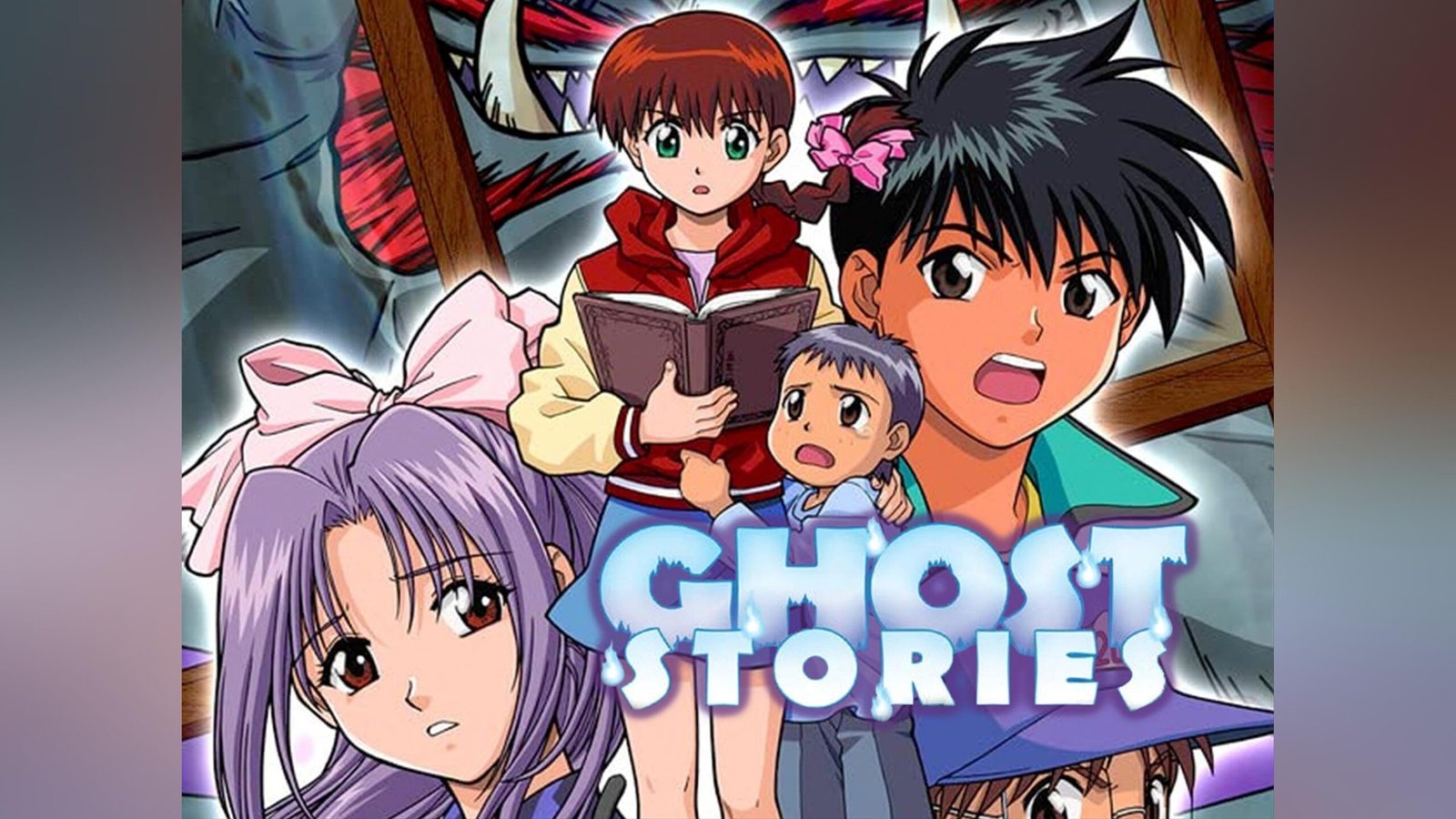
Every so often, an anime comes along that completely ignores the rulebook and somehow becomes legendary because of it. Ghost Stories Anime is exactly that kind of phenomenon. On the surface, it looks like a typical early-2000s supernatural anime about haunted schools, restless spirits, and brave kids facing the unknown. Dig a little deeper, though, and you’ll find one of the strangest success stories in anime history.
What makes Ghost Stories Anime unforgettable isn’t just the eerie folklore or ghost-of-the-week structure. It’s the wildly unfiltered English dub that turned a forgotten horror series into a cult classic. Loved by some, criticized by others, and endlessly quoted online, this anime still sparks debate decades later.
So how did a relatively serious Japanese ghost anime transform into a chaotic comedy in the West? And why does it still matter today? Let’s break it all down.
What Is Ghost Stories Anime?
Ghost Stories Anime, originally titled Gakkou no Kaidan, premiered in Japan in 2000. The series follows a group of elementary school students who move to a new town and discover their school is haunted by spirits drawn from Japanese urban legends, folklore, and yokai mythology.
The main cast includes Satsuki Miyanoshita, her younger brother Keiichiro, their friend Hajime, classmate Momoko, and their talking cat companion, Kaya. Each episode revolves around confronting a different ghost using knowledge passed down from Satsuki’s late mother.
In Japan, Ghost Stories Anime was treated as a children’s horror series. It wasn’t groundbreaking, but it wasn’t a failure either. Ratings were average, merchandise was limited, and the show quietly faded into obscurity. That should have been the end of the story. Instead, it was only the beginning.
The Japanese Version: Straightforward Supernatural Horror
Before the controversy and memes, Ghost Stories Anime was played straight. The original Japanese version focused on spooky atmosphere, moral lessons, and traditional ghost lore. Episodes often included themes like respecting the dead, facing fear, and understanding the consequences of human actions.
Common elements in the original version included:
-
Traditional Japanese spirits and legends
-
School-based urban myths
-
Emotional storytelling aimed at children
-
Light humor balanced with genuine scares
The tone was comparable to other supernatural anime of the era, such as Requiem from the Darkness or early yokai-themed series. Nothing about it suggested future infamy.
How the English Dub Changed Everything
The real reason Ghost Stories Anime became legendary lies entirely in its English dub. When the series was licensed for Western release, the Japanese studio reportedly gave the English production team unusual freedom. The only rules were simple: keep the character names, basic plot structure, and how ghosts were defeated.
Everything else was fair game.
The result was one of the most unhinged anime dubs ever produced. Voice actors were encouraged to improvise, rewrite dialogue, and inject adult humor, pop culture references, sarcasm, and dark comedy wherever possible. The tone shifted from spooky kids’ anime to full-blown parody.
Instead of playing scenes seriously, the English dub leaned into:
-
Absurd humor and satire
-
Political jokes and social commentary
-
Offensive stereotypes played for shock value
-
Fourth-wall-breaking dialogue
-
Completely altered character personalities
This bold approach turned Ghost Stories Anime into something entirely new.
Why the Ghost Stories Anime Dub Is So Controversial
The English dub is often described as “love it or hate it,” and for good reason. It pushes boundaries that most anime dubs wouldn’t dare approach today.
Critics argue the dub includes:
-
Inappropriate jokes
-
Cultural insensitivity
-
Outdated humor
-
Content unsuitable for younger viewers
Supporters counter that:
-
It saved the series from obscurity
-
It was clearly intended as parody
-
The voice acting is energetic and memorable
-
It represents a unique moment in dubbing history
Regardless of where you stand, there’s no denying that the dub completely redefined Ghost Stories Anime in Western pop culture.
Characters That Became Comedy Icons
One of the most fascinating aspects of Ghost Stories Anime is how the English dub reshaped the characters.
Satsuki Miyanoshita
In the Japanese version, Satsuki is calm, responsible, and emotionally grounded. In the English dub, she becomes sarcastic, blunt, and often openly hostile. Her dry delivery is responsible for many of the show’s most quoted lines.
Hajime Aoyama
Originally portrayed as a tough but kind-hearted kid, Hajime’s English dub persona leans heavily into exaggerated stereotypes. His dialogue is intentionally outrageous, making him one of the most talked-about characters.
Momoko Koigakubo
Momoko shifts from sweet and cheerful to aggressively upbeat and clueless in the dub. Her tone contrasts sharply with the chaos around her, adding to the absurdity.
Kaya the Cat
Kaya, the possessed cat, becomes a constant source of snark and commentary. The dub gives him lines that feel more like a stand-up routine than a supernatural guide.
Why Ghost Stories Anime Became a Cult Classic
Not every anime earns cult status, but Ghost Stories Anime checked all the boxes.
Reasons for its cult following include:
-
Viral clips shared on forums and video platforms
-
Quotable dialogue that feels unscripted
-
Nostalgia for early 2000s anime fandom
-
Shock value that stands out from polished modern dubs
-
A “you had to be there” cultural moment
Fans don’t just watch Ghost Stories Anime. They quote it, debate it, and rewatch it to catch jokes they missed.
The Role of Censorship and Localization
The dub of Ghost Stories Anime is often cited in discussions about anime localization. It represents an extreme example of how far adaptation can go when cultural context shifts.
Unlike heavily censored dubs that remove content, this one added material instead. It challenges the idea of authenticity and raises questions about creative freedom versus respect for source material.
Today, most studios would never allow this level of deviation. That makes Ghost Stories Anime a fascinating case study in media translation.
Themes Beneath the Chaos
Despite the comedic insanity of the English dub, the core structure of Ghost Stories Anime still carries themes worth noting.
These include:
-
Fear of the unknown
-
Childhood resilience
-
Friendship under pressure
-
Cultural interpretations of death
-
The clash between tradition and modernity
Interestingly, the contrast between serious supernatural plots and ridiculous dialogue creates a unique viewing experience that keeps audiences engaged.
Ghost Stories Anime and Modern Anime Culture
In today’s anime landscape, Ghost Stories Anime is frequently referenced in discussions about:
-
Worst and best dubs of all time
-
Anime parody and satire
-
Localization ethics
-
Meme culture in fandom spaces
It paved the way for more experimental approaches to dubbing, even if none have gone quite as far.
Streaming platforms and social media have also introduced the series to new generations, ensuring its legacy continues.
Frequently Asked Questions About Ghost Stories Anime
Is Ghost Stories Anime a horror or comedy?
The original Japanese version is horror-focused, while the English dub turns it into a comedy parody.
Is Ghost Stories Anime suitable for kids?
The Japanese version is more child-friendly. The English dub is intended for older audiences due to mature humor.
Why is Ghost Stories Anime so famous?
Its unconventional English dub transformed it into a cult classic known for shock humor and quotable lines.
Is the dub officially approved?
Yes, it was legally produced under a unique licensing agreement that allowed creative freedom.
Why People Still Talk About Ghost Stories Anime
Few anime manage to stay relevant without remakes, sequels, or constant promotion. Ghost Stories Anime survives purely through word of mouth and online discussion.
It’s often recommended with a warning and a smile. Viewers are told not to expect a traditional anime experience, but something closer to a late-night comedy experiment disguised as a ghost story.
That unpredictability is exactly why it works.
Conclusion: A Beautifully Bizarre Anime Experiment
Ghost Stories Anime is proof that failure isn’t always final and that creativity can come from unexpected places. What began as a modest supernatural series evolved into one of the most talked-about anime dubs ever made.
Whether you appreciate it as satire, critique it for its excesses, or simply enjoy the chaos, there’s no denying its impact. It stands as a time capsule of early anime localization and a reminder that sometimes breaking the rules creates something unforgettable.
If you’ve watched Ghost Stories Anime, chances are you have an opinion about it. Share your thoughts, debate the dub, and keep the conversation alive. After all, cult classics only stay alive when fans keep talking.