
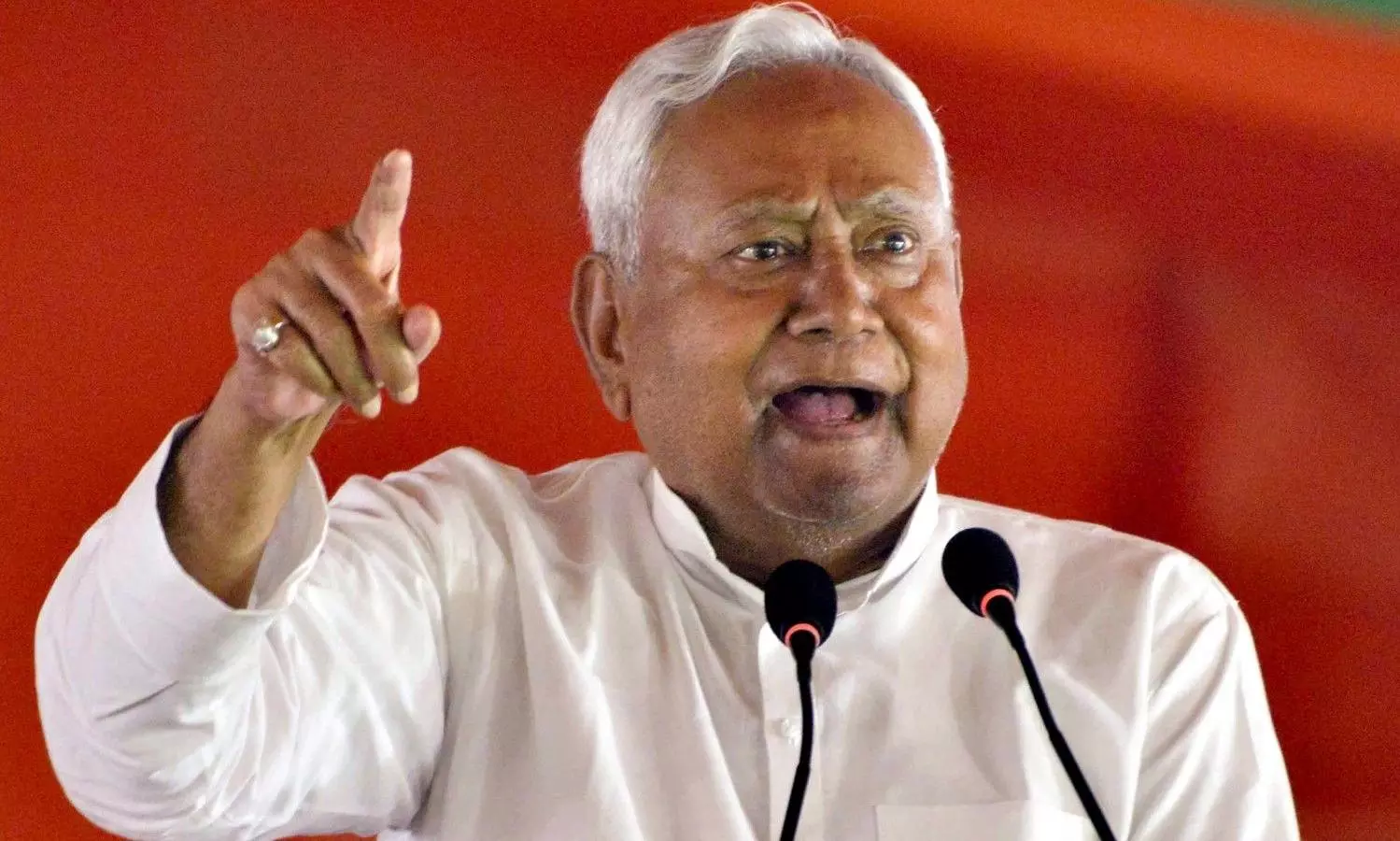
Politics in India often feels like a high-stakes chess game. Alliances shift. Rivals become partners. Critics turn into collaborators. Yet, few leaders have navigated this complex board as strategically as Nitish Kumar. Love him or question him, one thing is certain: his decisions have deeply shaped the destiny of Bihar.
From road construction and law-and-order reforms to controversial political realignments, Nitish Kumar’s leadership has left a visible imprint on Bihar’s governance model. Over the past two decades, his administrative reforms, policy shifts, and coalition politics have redefined development in one of India’s most politically vibrant states.
In this article, we’ll explore seven key decisions that shaped Bihar under Nitish Kumar, examine their long-term impact, and understand why his political journey remains one of the most fascinating in Indian democracy.
BIO: Nitish Kumar at a Glance
| Full Name | Nitish Kumar |
|---|---|
| Date of Birth | 1 March 1951 |
| Age | 74 (as of 2025) |
| Profession | Politician |
| Nationality | Indian |
| Net Worth (approx.) | Estimated ₹2–3 crore (public disclosures vary) |
| Notable Works / Achievements | Longest-serving Chief Minister of Bihar, governance reforms, women empowerment initiatives, infrastructure development |
Understanding Nitish Kumar’s Political Rise
Before diving into the seven key decisions, it’s important to understand the context. Nitish Kumar began his political journey influenced by socialist ideology and leaders like Jayaprakash Narayan. Over time, he emerged as a prominent face in the Janata movement and later became a founding member of Janata Dal (United).
When Nitish Kumar first became Chief Minister in 2005, Bihar was struggling with:
-
Poor infrastructure
-
Weak law enforcement
-
Low literacy rates
-
Limited industrial investment
-
High migration levels
Many analysts believed change would take decades. However, Nitish Kumar approached governance with a mix of pragmatism and political calculation.
Now, let’s break down the seven key decisions that truly shaped Bihar.
Restoring Law and Order: The Turning Point
When Nitish Kumar assumed office, Bihar’s image was heavily associated with crime and instability. Investors hesitated. Businesses avoided expansion. Ordinary citizens felt unsafe.
What He Did
-
Fast-tracked criminal cases
-
Strengthened policing systems
-
Established speedy trial courts
-
Cracked down on organized crime
He worked closely with the administrative machinery under the Government of Bihar to push accountability measures.
The Impact
Within a few years, conviction rates improved significantly. Kidnappings and violent crimes declined. This restoration of law and order became the foundation for every other reform that followed.
Without stability, development cannot happen. Nitish Kumar understood this early.
The Road Revolution: Rebuilding Infrastructure
If you speak to residents across rural Bihar, many will tell you that better roads changed their lives.
The Infrastructure Push
Nitish Kumar prioritized:
-
Rural road connectivity
-
Highway expansion
-
Bridge construction
-
Improved public transport
The capital city, Patna, saw significant urban infrastructure upgrades. Remote districts were connected through all-weather roads.
Why It Mattered
Improved connectivity meant:
-
Easier access to markets
-
Faster emergency services
-
Better school attendance
-
Reduced rural isolation
Infrastructure development under Nitish Kumar became one of the most visible signs of progress in Bihar.
Women’s Empowerment Through Reservation Policies
One of the boldest decisions taken by Nitish Kumar was reserving 50% seats for women in Panchayati Raj institutions.
Key Measures
-
50% reservation for women in local governance
-
Increased participation in grassroots democracy
-
Bicycle scheme for schoolgirls
-
Scholarships for female students
The Mukhyamantri Balika Cycle Yojana, in particular, encouraged girls to attend secondary school. The sight of young girls cycling to school became symbolic of change.
Long-Term Effects
-
Higher female literacy rates
-
Greater political participation
-
Social transformation in conservative regions
Nitish Kumar’s focus on gender equality strengthened Bihar’s social fabric in ways that statistics alone cannot capture.
Alliance Politics: Breaking and Rebuilding Coalitions
Perhaps the most debated aspect of Nitish Kumar’s career is his shifting alliances.
Over the years, he partnered with:
-
Bharatiya Janata Party
-
Rashtriya Janata Dal
His decisions to leave and rejoin alliances sparked intense political debate.
Why It Was Significant
These moves reshaped:
-
Bihar’s coalition politics
-
Electoral equations
-
Legislative stability
-
National political strategies
Critics called it opportunism. Supporters called it pragmatic governance. Regardless of opinion, Nitish Kumar’s alliance decisions directly influenced Bihar’s political direction.
Prohibition Policy: A Social Experiment
In 2016, Nitish Kumar introduced statewide alcohol prohibition.
Objectives
-
Reduce domestic violence
-
Improve family savings
-
Enhance public health
-
Curb substance abuse
The policy was implemented across Bihar with strict enforcement.
Results and Controversy
While many women supported the move, critics argued that:
-
Illegal liquor trade increased
-
State revenue declined
-
Enforcement challenges emerged
Yet, prohibition remains one of the most defining and controversial decisions of Nitish Kumar’s tenure.
Education and Institutional Reforms
Education reform was another core focus area.
Key Initiatives
-
Teacher recruitment drives
-
School infrastructure improvement
-
Incentives for student attendance
-
Expansion of higher education institutions
New universities and technical institutions were developed, particularly in districts like Nalanda.
Nitish Kumar believed that human capital development was essential for long-term economic growth.
Outcomes
-
Improved school enrollment
-
Higher literacy rates
-
Increased competitive exam participation
Education reform strengthened Bihar’s socio-economic indicators significantly.
Governance Transparency and Administrative Reforms
Nitish Kumar emphasized governance reforms and bureaucratic accountability.
Major Steps
-
Right to Public Services Act
-
Time-bound service delivery
-
Digital governance initiatives
-
Public grievance redressal systems
Administrative modernization improved efficiency across departments.
Moreover, judicial coordination with institutions like the Patna High Court enhanced legal oversight and governance standards.
Economic Growth Under Nitish Kumar
Bihar witnessed:
-
Higher GDP growth rates in certain years
-
Expansion in agriculture productivity
-
Development of small-scale industries
-
Growth in rural entrepreneurship
Though challenges remain—such as unemployment and industrial investment—Nitish Kumar’s tenure marked a departure from stagnation.
Migration trends continue, but the narrative has evolved from survival migration to aspirational mobility.
Nitish Kumar and Social Justice
Nitish Kumar’s politics has consistently emphasized:
-
Backward caste empowerment
-
Inclusive development
-
Social harmony
-
Secular governance
His early association with socialist ideology shaped policies aimed at equity rather than elite-centric development.
Bihar’s caste dynamics remain complex, but Nitish Kumar attempted to balance social equations without aggressive polarization.
A Quick Summary of the 7 Key Decisions
| Decision | Impact Area | Long-Term Effect |
|---|---|---|
| Law and Order Reform | Public Safety | Investor Confidence |
| Infrastructure Development | Connectivity | Economic Activity |
| Women’s Reservation | Social Justice | Female Empowerment |
| Alliance Politics | Governance Stability | Electoral Realignment |
| Prohibition | Social Policy | Mixed Outcomes |
| Education Reform | Human Capital | Literacy Growth |
| Governance Transparency | Administration | Improved Efficiency |
The Criticism: Not Everything Was Perfect
No political career is without controversy.
Common criticisms of Nitish Kumar include:
-
Frequent alliance changes
-
Limited industrialization
-
Implementation challenges in prohibition
-
Youth unemployment concerns
However, even critics acknowledge that Bihar today looks different from the Bihar of the early 2000s.
Nitish Kumar’s governance model may not be flawless, but it undeniably altered the state’s trajectory.
Nitish Kumar’s Legacy in Bihar Politics
So, how should history judge Nitish Kumar?
As a reformer?
A political survivor?
A coalition strategist?
A social justice advocate?
Perhaps all of the above.
Few leaders have governed Bihar for as long and as consistently as Nitish Kumar. His decisions influenced:
-
Electoral politics
-
Policy direction
-
Administrative culture
-
Public expectations
He raised the benchmark for governance in Bihar. Future leaders will inevitably be compared against his tenure.
Why Nitish Kumar Still Matters Today
Even after decades in politics, Nitish Kumar remains central to Bihar’s political discourse. His strategic decisions continue to influence national coalition politics.
Moreover, his administrative experiments—whether successful or controversial—offer case studies in:
-
Federal governance
-
Social reform policy
-
Development economics
-
Political adaptability
That’s why Nitish Kumar remains one of the most studied political figures in contemporary India.
Final Thoughts: The Man Who Reshaped Bihar
Nitish Kumar did not transform Bihar overnight. Change came slowly, sometimes unevenly. Yet step by step, decision by decision, he shifted the narrative.
From restoring law and order to empowering women, from building roads to reshaping alliances, Nitish Kumar made choices that defined an era.
History may debate his political switches. Analysts may dissect his strategies. Critics may challenge his policies. But one fact remains undeniable: Nitish Kumar shaped Bihar in ways few leaders ever have.